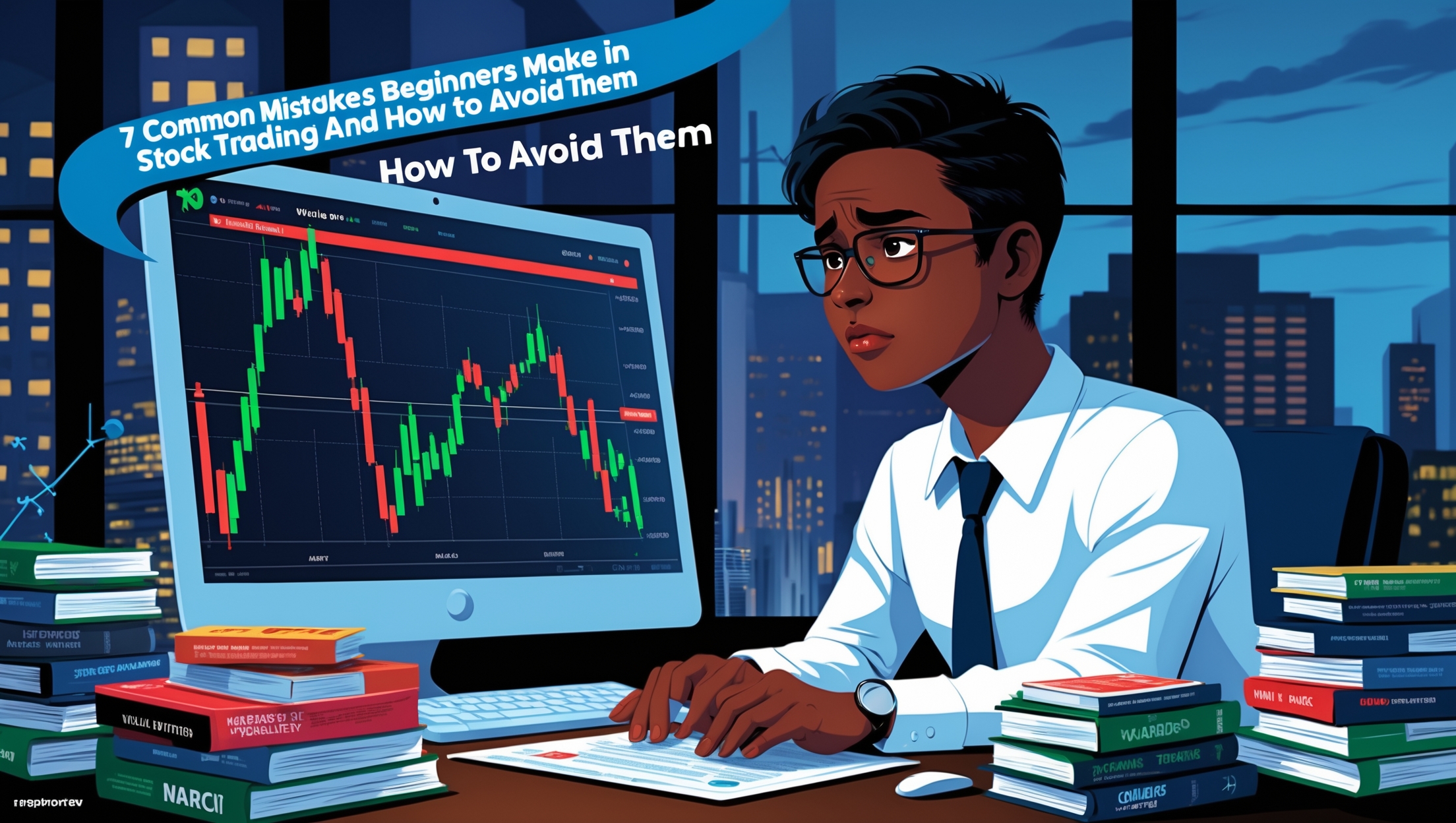
7 Common Mistakes Beginners Make in Stock Trading (and How to Avoid Them)
7 Common Mistakes Beginners Make in Stock Trading (and How to Avoid Them)
Avoid costly mistakes in stock trading! Learn the 7 common mistakes beginners make in stock trading and discover my personal tips, strategies, and tools for trading smarter and growing your wealth.

Table of Contents
Why Beginners Often Make Mistakes
When I first started trading, I made countless mistakes. I would chase “hot stocks,” ignore research, and let emotions dictate my trades. Over time, I realized that avoiding these mistakes early is key to consistent success.
Even beginners can improve quickly by focusing on strategy, planning, and discipline. Using tools like TradingView, Robinhood, and Webull makes it much easier to stay organized and informed.
Mistake 1: Chasing Hot Stocks
It’s tempting to jump on the latest trending stock, but this is one of the biggest beginner mistakes. Quick hype often leads to volatility and losses.
Instead, I focus on high-quality stocks and trends, using TradingView to analyze charts before trading: TradingView Affiliate Link.
Mistake 2: Ignoring Research
I used to make trades based on a tip from a friend or social media post. Ignoring proper research is a fast way to lose money.
Now, I always check fundamentals, news, and technical charts on Webull or Robinhood: Robinhood Affiliate Link | Webull Affiliate Link.
Mistake 3: Overtrading
Overtrading leads to stress, mistakes, and fees. Beginners often feel they need to make constant trades to see results.
I limit myself to trades that fit my plan and strategy, which helps me stay patient and profitable.
Mistake 4: Letting Emotions Control Decisions
Fear and greed are the biggest enemies of new traders. I’ve lost money because I panicked during a dip or bought impulsively during a hype spike.
Keeping a trading journal and following a routine helps me avoid emotional decisions and trade with discipline.
Mistake 5: Not Using Stop-Losses
Beginners often skip stop-losses, thinking they’ll manually exit a bad trade. I learned the hard way that stop-losses protect your capital and prevent major losses.
Setting stop-losses on Robinhood or Webull ensures that one mistake doesn’t ruin your portfolio.
Mistake 6: Failing to Track Trades
Tracking trades is essential for learning. I record every trade, including entry, exit, and reasoning, which helps me identify patterns and improve my strategy over time.
Even small trades provide valuable lessons when you analyze them consistently.
Mistake 7: Expecting Quick Riches
The stock market is not a get-rich-quick scheme. Beginners often make the mistake of chasing immediate gains, which usually results in losses.
Patience, consistent practice, and learning from mistakes allow you to build wealth steadily and safely.
How My eBook Helps Beginners Avoid These Mistakes
In my eBook, I explain how I pay my bills trading stocks, avoid common pitfalls, and maintain discipline. Beginners can see step-by-step examples of trades and learn how to succeed without risking too much: Pay Bills With Stocks eBook.
Tips to Avoid Mistakes
- Focus on quality stocks
- Use alerts and chart analysis on TradingView
- Stick to a trading plan
- Track every trade in a journal
- Start small and grow gradually
The Importance of Tools in Avoiding Mistakes
TradingView helps me analyze trends, candlestick patterns, and support/resistance levels, making it easier to avoid impulsive trades.
Robinhood and Webull let me execute trades efficiently and track performance, reducing errors caused by rushed decisions.
Final Thoughts
Avoiding beginner mistakes is all about discipline, planning, and learning from experience. By following a routine, using reliable tools, and focusing on long-term growth, beginners can trade smarter, reduce stress, and build wealth over time.
Affiliate Links Recap:
- TradingView → https://www.tradingview.com/?aff_id=155687
- Robinhood → https://join.robinhood.com/audreym76
- Webull → https://a.webull.com/3DbkWRSEV8Y5EruPXV
- My eBook → https://stockflowreport.gumroad.com/l/paybillswithstocks
When I first started trading, I wanted to be right on every trade. That pressure led me to force trades that weren’t there. The truth is, you don’t need to trade every day to succeed—you only need to trade when the right setup shows up.
Another mistake beginners make is not having a clear risk management plan. I used to risk way too much of my account on a single trade, and a couple of bad moves would set me back for weeks. Now I never risk more than a small percentage, which protects my account.
I also learned that following social media hype can be dangerous. By the time a stock is trending on Twitter or Reddit, the big gains are usually gone. I rely on TradingView charts instead of social media chatter: TradingView Affiliate Link.
Not diversifying is another big mistake. Beginners often throw all their money into one stock they “believe in.” I’ve seen portfolios wiped out this way. Spreading investments across a few different sectors is much safer.
Many beginners also underestimate the power of paper trading. Before I risked real money, I practiced with paper trades to test strategies. It gave me confidence and taught me how to spot patterns without stress.
Another error is holding losing trades too long. I used to “hope” a stock would recover, only to watch it sink further. Now I stick to my stop-losses, no questions asked.
Beginners often ignore fees and commissions. Even if apps like Robinhood and Webull have zero-commission trades, there are still hidden costs like spreads or margin fees. It’s important to understand how these add up.
One mistake I made was not keeping my emotions in check when I had a winning trade. Overconfidence is just as dangerous as fear. I’ve learned to celebrate small wins and move on without chasing more.
Skipping education is another big one. I thought I could wing it, but the market humbled me. I now spend time daily learning strategies, studying charts, and reading. My eBook is my way of showing beginners what I wish I had when I started: Pay Bills With Stocks eBook.
A lot of beginners don’t realize the importance of having a routine. Without structure, it’s easy to get distracted and miss opportunities. Even spending 20 minutes each morning reviewing charts on TradingView makes a big difference.
Another mistake is ignoring market conditions. Sometimes, the market is choppy and not worth trading. I’ve learned that it’s okay to sit out and wait for better setups instead of forcing trades.
Beginners also tend to reinvest all their profits right away. While growing your account is important, I recommend pulling out small amounts when possible. This makes the gains feel real and keeps motivation high.
Some traders jump into advanced strategies like options without understanding the basics of stocks first. I’ve seen people blow up accounts this way. It’s much smarter to master stocks before moving into complex trading.
Not tracking progress is another common issue. Without looking back at trades, it’s impossible to see what’s working. Journaling has been one of my biggest growth tools as a trader.
Lastly, beginners often lack patience. They expect to double their money overnight. The reality is, steady growth wins the race. Quick gains might happen once in a while, but consistent discipline is what builds lasting wealth.

Stay ahead in the stock market! Subscribe to our newsletter and receive exclusive stock flow reports, trading insights, and actionable tips directly in your inbox. Join thousands of traders who get our updates first.