How to Use Technical Analysis Without Getting Confused
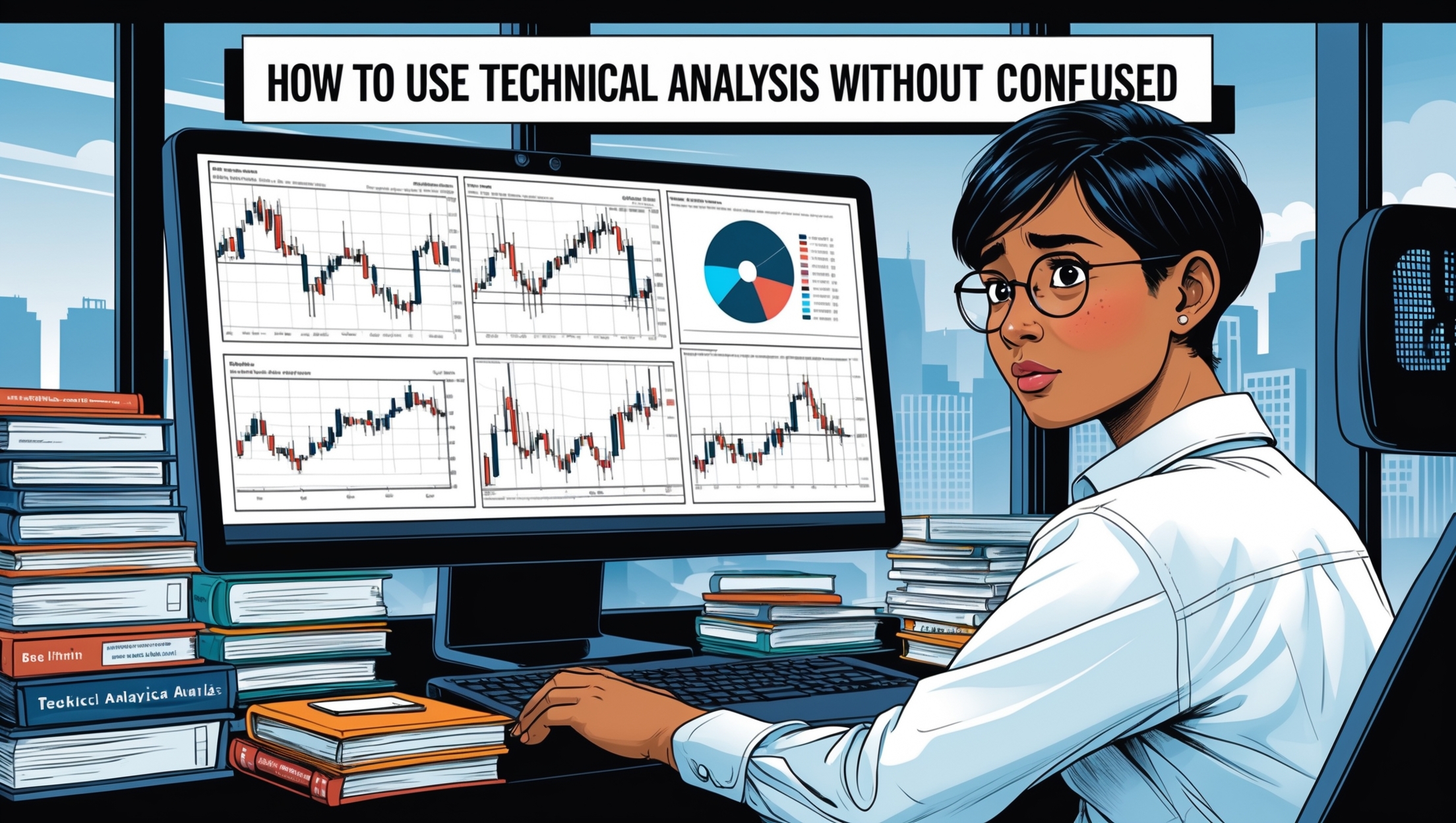
How to Use Technical Analysis Without Getting Confused
Learn how to use technical analysis to trade stocks without getting overwhelmed. Discover simple strategies, beginner-friendly tools, and my personal tips for reading charts like a pro.
Table of Contents
When I first started trading, technical analysis felt like a foreign language. Candlesticks, moving averages, RSI—everything seemed confusing. I remember staring at charts for hours, wondering if I would ever understand them.
Over time, I realized that technical analysis doesn’t have to be complicated. You can start with a few key indicators, use the right tools, and build your confidence gradually.
In this guide, I’ll share exactly how I use technical analysis without getting confused, the beginner-friendly tools I rely on, and how I combine analysis with real trading strategies to pay my bills every month. I’ll also show you my step-by-step eBook that explains my system.
Why Technical Analysis Is Important
Technical analysis is the art of reading stock charts to understand price trends, momentum, and potential entry and exit points. Even as a beginner, learning a few key concepts can help you:
- Spot trends early
- Reduce emotional trading
- Make informed decisions
- Track your portfolio like a professional
I personally use TradingView for my analysis because it’s beginner-friendly but also powerful enough for advanced strategies: TradingView.
Start With the Basics
When I began, I focused on just a few indicators:
- Moving Averages (MA) → Shows the average price over time, helping me identify trends
- Relative Strength Index (RSI) → Highlights overbought or oversold conditions
- Volume → Indicates how active a stock is and confirms trends
You don’t need to use dozens of indicators at once. Starting simple helped me avoid confusion and build confidence.
Candlestick Charts Made Simple
Candlestick charts used to overwhelm me, but I broke them down step by step:
- Green candles → Price went up
- Red candles → Price went down
- Long bodies → Strong movement
- Shadows/wicks → Price tested highs and lows
Understanding these basics allowed me to spot reversals and trends without overthinking.
Identify Support and Resistance
One of the easiest ways to use technical analysis is to draw support and resistance levels. These are price levels where stocks historically:
- Bounce back up (support)
- Get rejected (resistance)
I mark these on TradingView and use them to plan my trades. Even as a beginner, this strategy helped me avoid bad trades and enter positions with confidence.
Use Alerts to Avoid Overwhelm
I don’t stare at charts all day. Instead, I set alerts on TradingView for key price levels, trendline breaks, or RSI signals. This way, I only focus on trades that meet my criteria and avoid unnecessary stress.
Track Only Stocks on Your Watchlist
Technical analysis is easier when you focus on a few stocks at a time. I maintain a watchlist on Robinhood and Webull, which allows me to:
- Track movements efficiently
- Apply indicators without distraction
- Learn patterns gradually
Platforms I use:
- Robinhood → Beginner-friendly and easy to execute trades: Robinhood
- Webull → Advanced charts and free stock bonuses: Webull
Combine Technical Analysis With a Plan
Even if you read charts perfectly, you need a plan for your trades. I use my eBook, Pay Bills With Stocks, to set:
- Entry and exit points
- Risk limits per trade
- Monthly withdrawal plans for bills and groceries
This approach ensures I’m not guessing, and my account continues to grow safely.
Learn Patterns Gradually
I started with a few patterns like:
- Double tops and bottoms
- Head and shoulders
- Trendline breakouts
I practiced spotting them on paper trading first, which helped me recognize them in real time without feeling overwhelmed.
Keep a Trading Journal
Recording every trade, why I entered it, and the outcome is invaluable. My journal helps me:
- Identify mistakes
- Spot recurring patterns
- Improve my technical analysis skills
Even beginners can benefit from journaling to simplify their learning process.
Avoid Analysis Paralysis
One of the biggest mistakes beginners make is over-analyzing every chart. I learned to trust my simple indicators and set rules:
- Only trade stocks on my watchlist
- Use 2–3 indicators per trade
- Follow my withdrawal and growth plan
This keeps technical analysis manageable and effective.
Start With Small Capital
You don’t need a huge account to practice technical analysis. I started with a small amount and gradually scaled up as I gained confidence. My eBook explains how I pay bills from stocks even with a small starting balance: Pay Bills With Stocks.
Set Realistic Expectations
Technical analysis helps you make informed decisions, but it’s not a crystal ball. I always manage risk and only trade what I can afford to lose, which has been key to consistent growth.
Use Technical Analysis to Track Your Stocks Like a Pro
Even as a beginner, using technical analysis properly allows you to:
- Spot trends early
- Make smarter trading decisions
- Track your portfolio efficiently
- Combine analysis with income generation
Final Thoughts
Technical analysis doesn’t have to be confusing. Start simple, focus on a few indicators, maintain a watchlist, and combine analysis with a clear plan. Using tools like TradingView, beginner platforms like Robinhood and Webull, and my eBook Pay Bills With Stocks, even beginners can confidently analyze stocks and turn their trading account into a consistent income source.
One of the first things I realized is that technical analysis is a skill, not magic. It takes practice, patience, and repetition to read charts confidently.
When I started, I focused on just one or two indicators. This small focus helped me avoid overwhelm and actually see patterns clearly.
I also learned the value of keeping things simple. Sometimes beginners try to use ten indicators at once, but I found that less is more when you’re starting out.
Candlestick patterns can be intimidating at first, but breaking them down into basic elements—body, wick, and color—made them much easier to understand.
I started marking support and resistance levels on TradingView. This simple habit helped me predict potential price movements without feeling lost in complicated formulas.
Alerts on TradingView became my best friend. Instead of staring at charts all day, I set notifications to alert me when key price levels are hit, which reduces stress and keeps me disciplined.
I also noticed that focusing on a small watchlist made technical analysis much more manageable. By tracking only 5–10 stocks at a time, I could really learn their behavior and see patterns emerge.
Keeping a trading journal was a game-changer. I write down every trade, why I made it, and the outcome. Over time, this journal has been a roadmap of my learning and growth.
Even when I started small, I treated my trading account seriously. By combining technical analysis with a clear plan, I could make confident trades and gradually scale my account.
Paper trading was a safe way to practice. I simulated trades using the patterns I learned, which helped me understand how indicators behave in real market conditions.
I also realized that emotional control is key. Technical analysis works best when you follow your rules and don’t let fear or greed dictate your trades.
I start each trading day by reviewing my watchlist, checking alerts, and planning trades based on clear criteria. This routine keeps me focused and reduces confusion.
Understanding trends is crucial. I focus on simple trend analysis like moving averages and price direction instead of trying to predict every tiny movement.
I combine technical analysis with my income strategy. The same charts I use for trading also help me decide how much to withdraw for bills and how much to reinvest to grow my account.
Finally, I remind myself every day that technical analysis is a tool, not a guarantee. With patience, practice, and the right tools like TradingView, Robinhood, and Webull, even beginners can confidently read charts and trade smartly.

Stay ahead in the stock market! Subscribe to our newsletter and receive exclusive stock flow reports, trading insights, and actionable tips directly in your inbox. Join thousands of traders who get our updates first.