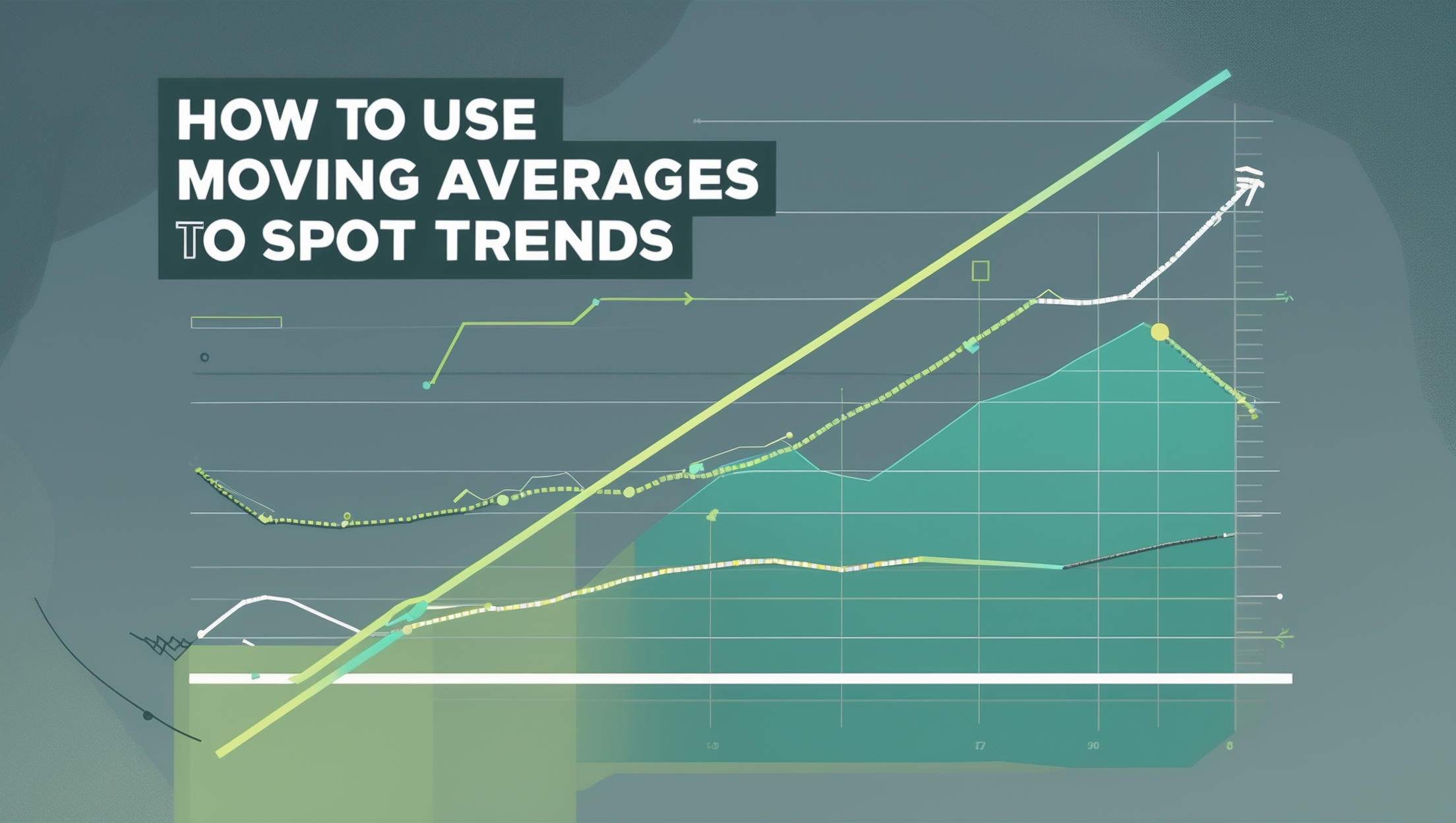
How to Use Moving Averages to Spot Trends
How to Use Moving Averages to Spot Trends
When I first started trading, charts looked like a chaotic mess. Prices were moving up and down, and I struggled to understand the bigger picture. That’s when I discovered moving averages. Using them has transformed the way I analyze trends and make trading decisions.
In this post, I’ll explain what moving averages are, how to use them to spot trends, and practical strategies I personally follow to make informed trades.
If you want a step-by-step guide to building a stock portfolio and even generate consistent returns, check out my system here: Pay Bills With Stocks.
Table of Contents
What Is a Moving Average?
A moving average (MA) is a tool that smooths out price data by creating a constantly updated average price over a specific period. It helps me filter out short-term noise and focus on the underlying trend.
There are different types of moving averages, but the two most common are:
Simple Moving Average (SMA) – Calculates the average price over a set period, giving equal weight to each price point.
Exponential Moving Average (EMA) – Gives more weight to recent prices, making it more responsive to recent market changes.
Why Moving Averages Matter
Moving averages help me see trends more clearly. When prices are above a moving average, it often signals an uptrend. When prices are below, it can indicate a downtrend.
They also help identify potential support and resistance levels. In my experience, these levels are where traders often make buying or selling decisions, which can influence the next market move.
How I Use Moving Averages to Spot Trends
I use moving averages in several ways:
1. Trend Identification – By plotting MAs on a chart, I can quickly identify whether the market is in an uptrend, downtrend, or sideways consolidation.
2. Crossover Signals – When a short-term MA crosses above a long-term MA, it may indicate a bullish trend. Conversely, a short-term MA crossing below a long-term MA can signal a bearish trend.
3. Dynamic Support and Resistance – I watch how prices interact with moving averages. Prices bouncing off an MA can indicate strong support or resistance.
4. Confirmation Tool – I use MAs in combination with other indicators to confirm signals before entering trades.
Choosing the Right Moving Average Period
The period of the moving average depends on my trading style:
- Short-term (10–20 periods) – Captures recent price action, useful for day trading and swing trading.
- Medium-term (50 periods) – Balances responsiveness and stability, helpful for trend-following strategies.
- Long-term (100–200 periods) – Shows major trends and long-term market direction, ideal for investors.
Common Strategies I Use
I rely on a few moving average strategies:
Golden Cross – A short-term MA crossing above a long-term MA often signals a bullish trend. I watch for confirmation before entering trades.
Death Cross – A short-term MA crossing below a long-term MA can signal a bearish trend. This alerts me to potential downside risk.
MA Bounce – I look for prices bouncing off a moving average to enter trades in the direction of the trend.
Tips for Beginners
- Always combine moving averages with other indicators, like RSI or MACD, for better accuracy.
- Use multiple MAs to understand both short-term and long-term trends.
- Don’t rely solely on moving averages for entry or exit; treat them as part of your strategy.
My Personal Approach
In my own trading, I use a combination of EMA and SMA to spot trends. I also adjust the period based on market volatility and timeframes. This helps me avoid false signals and stay aligned with the market’s momentum.
Final Thoughts
Moving averages are a simple yet powerful tool to identify trends, support, and resistance. By combining them with other technical indicators, I can make informed decisions, manage risk, and stay disciplined in my trading.
Mastering moving averages has allowed me to spot trends early, avoid emotional trading, and build a more consistent portfolio.
If you want a practical system to trade confidently and generate returns, check out my guide here: Pay Bills With Stocks.
One thing I’ve learned is that moving averages are not just for spotting trends—they also help me filter out market noise, allowing me to focus on meaningful price movements.
Short-term MAs are great for capturing momentum, but they can produce false signals during sideways markets. I combine them with medium or long-term MAs to confirm trends.
EMA is my favorite for short-term trades because it reacts faster to recent price changes, which helps me catch trend reversals earlier than SMA alone.
I often look for multiple moving averages interacting together. When short-term MAs align above medium and long-term MAs, it signals a strong bullish trend that I can confidently follow.
Conversely, when short-term MAs fall below long-term MAs, it alerts me to potential downtrends and the need for caution or protective measures.
Using moving averages also helps me identify trend strength. The steeper the slope of an MA, the stronger the underlying trend appears, which influences my position sizing and risk management.
I’ve found that MA crossovers work best in trending markets, but in choppy or sideways markets, relying solely on crossovers can be misleading. That’s why I combine them with other indicators like RSI.
Support and resistance levels created by moving averages are dynamic. Prices often bounce off MAs multiple times before breaking through, providing multiple trading opportunities.
I also use moving averages to gauge overall market sentiment. When the majority of key stocks are above their long-term MAs, it indicates a bullish market environment.
Trend-following strategies based on moving averages have helped me stay invested during long uptrends while avoiding excessive losses during downtrends.
I pay attention to volume when moving averages indicate trend changes. High volume during an MA crossover confirms that many traders support the move, making it more reliable.
Combining moving averages with price patterns, like triangles or channels, gives me an additional layer of confirmation and improves my trade entry accuracy.
I keep a watchlist of stocks where moving averages indicate potential trend changes. This allows me to act quickly when signals align with my trading plan.
Even for long-term investing, moving averages help me identify better entry points. Buying near a support MA can increase my margin of safety and reduce risk.
Finally, I remind myself that moving averages are tools, not guarantees. They work best when used with discipline, risk management, and a clear trading plan.

Stay ahead in the stock market! Subscribe to our newsletter and receive exclusive stock flow reports, trading insights, and actionable tips directly in your inbox. Join thousands of traders who get our updates first.